So Your Dog Has Luxating Patella
Now What?
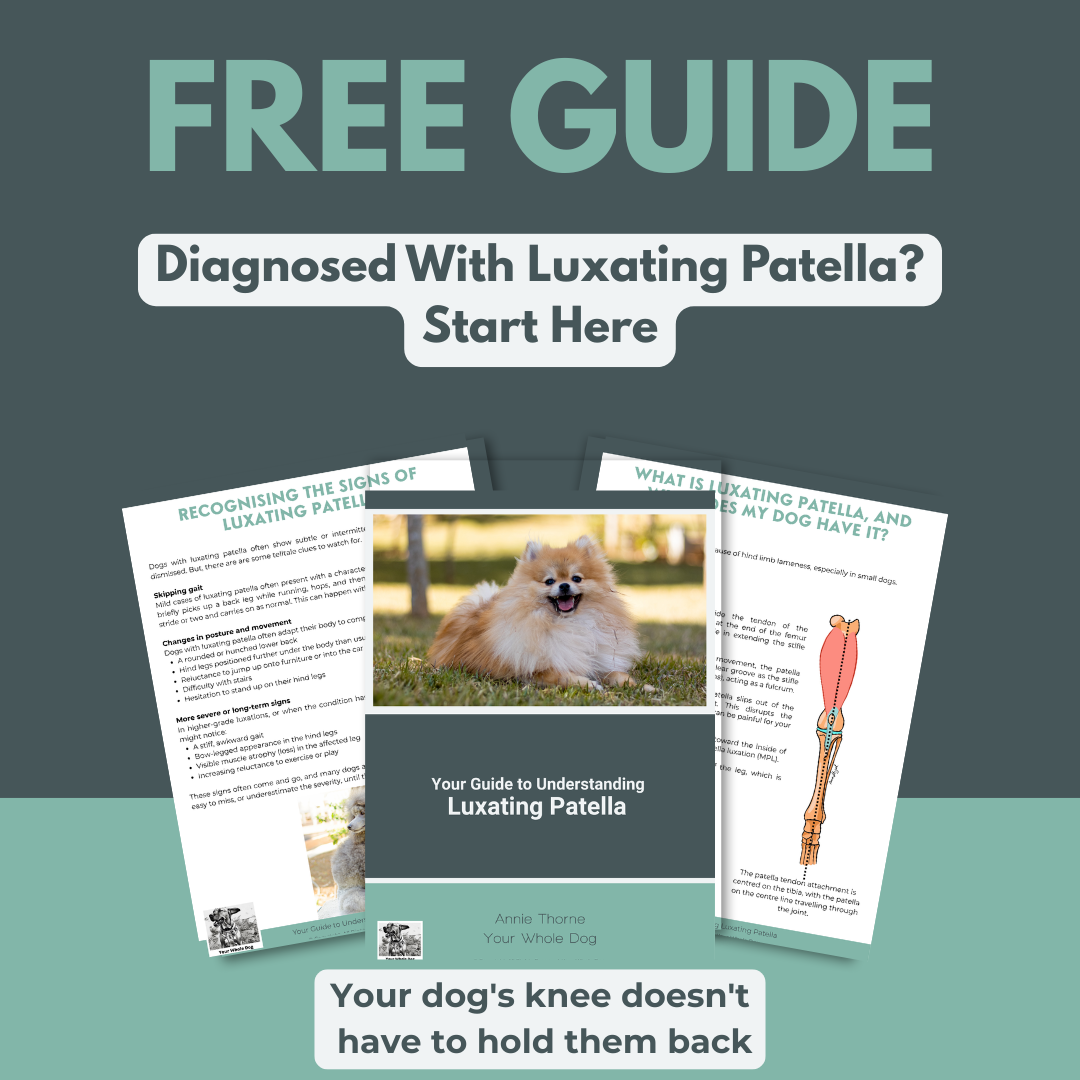
Luxating patella doesn't have to mean a life on the sidelines
A free guide for dog guardians who've just heard the words "luxating patella" - or suspect they're about to.
Maybe your vet mentioned it in passing. Maybe you've noticed your dog skip a back leg mid-run and pretend nothing happened. Either way, you're left with a diagnosis (or a half-diagnosis) and a hundred questions nobody's had time to answer. What does this actually mean for my dog? Will they need surgery? Is this my fault? Can they still live a full, active life?
Here's what I want you to know: luxating patella is manageable.
With the right information and the right team around you, most dogs with this condition go on to live long, comfortable, happy lives. You just need to understand what you're working with.
This guide walks you through exactly that - in three parts: what's actually happening in your dog's knee, what your options are (from conservative management to surgery), and how to build the support team that gets your dog through it.
Inside, you'll discover:
- What causes luxating patella and which dogs are most at risk
- How to recognise the signs, from subtle skipping to more obvious lameness
- The different grades of luxating patella and why early intervention matters
- Conservative multi-modal management strategies including weight management, supplements, bodywork, rehabilitation, and therapeutic exercise
- The compensatory patterns that develop and create pain throughout your dog's body
- Practical tips for supporting your dog through restricted activity and post-operative recovery.
Whether your dog has just been diagnosed, is preparing for surgery, managing the condition long-term, or you simply want to understand this common joint condition better, this guide will give you the knowledge and confidence to advocate for your dog's comfort and mobility.
Download your free guide today and take the first step toward helping your dog move more comfortably.